Colour Psychology

With the events of the past year plus affecting everyone, children have been far from immune and in some families perhaps the most affected. Don’t underestimate the power that colour psychology can have.

Whilst red is traditionally associated with anger, blue is said to have a calming effect and thus potentially helpful for babies & children. It is traditionally advised to use to help them to settle down to sleep. This is apparently because its reminiscent of the sky or sea, both of which have a soothing effect. I am definitely interested to see if more blue can help calm down my active toddler. But not only is it good for calming children, but blue has been said to boost creativity too which is another bonus.

The International Journal of Advanced Research published a study that showed blue appears to stimulate creativity in children. The study gave children between 8–12 years old a set of questions, one on blue paper and one on red. It found that the children who interacted with the colour blue were able to produce more “novel” ideas with a wider variety of answers. The red group, on the other hand, gave more “ordinary” answers.

However to spark learning, one needs yellow. Often linked to joy, it can denote the sun – and is great for boosting one’s mood – in both adults and children alike.  A landmark 1993 academic study found that children respond positively to bright colours like yellow as opposed to dark colours. It’s also associated with better concentration and memory, meaning it’s a great colour to incorporate into children’s learning. It isn’t recommended to paint an entire room in this colour by psycholgists, but to use it as an accent colour instead. Whilst this can be easier for nurseries and schools to do, at home it can be incorporated with a yellow desk, notebook, sheets of paper or paints and colouring pens & pencils more easily.

Photo by Anna Shvets on Pexels.com

Green on the other hand is calming and grounding – reminiscent of green found in nature – grass, leaves, trees, bushes etc. Similarly to blue, it’s said to be helpful for relaxing babies and helping children wind down to go to sleep. But it can also allegedly help children’s reading speed and understanding text. Again a softer green would be recommended for incorporating into a bedroom rather than a brighter green.
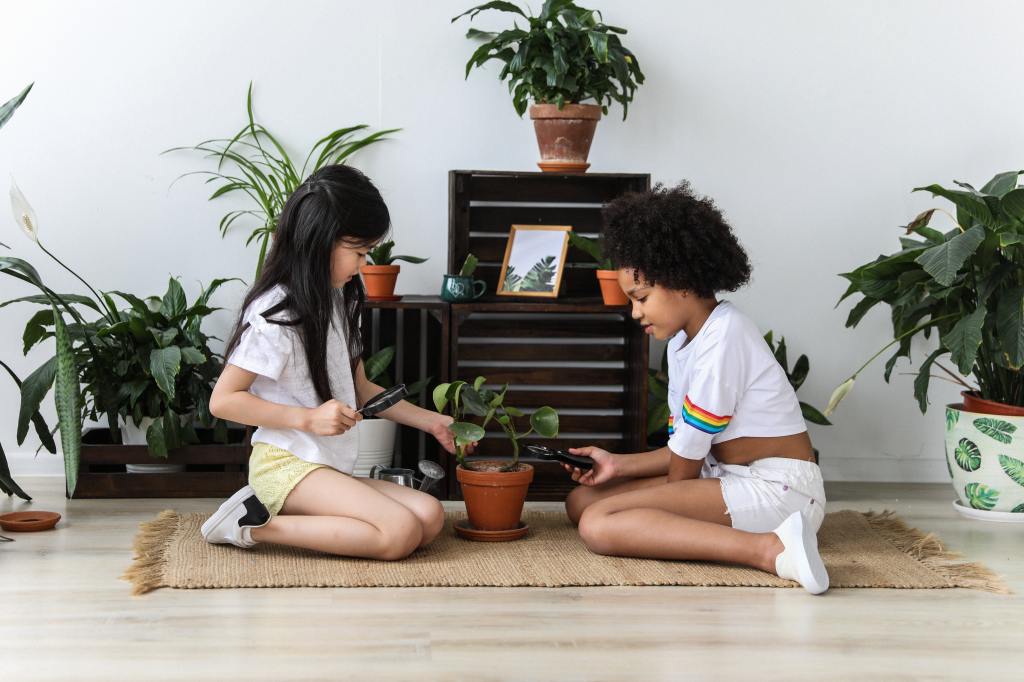
Other colours that are also relaxing are brown and beige which can balance out any brighter colours in a bedroom scheme that spark the creativity and joy. It can be easy to incorporate with natural materials like wood which once again bring in the natural from outside.

It’s important to observe however that neurodivergent children however can react differently to colours differently – some may find brighter colours overwhelming as for some it can cause a sensory overload – 85% perceive colours more intensely. In fact, a 2016 academic study showed bright yellow is particularly overwhelming for autistic boys.  It has been noted that they are particularly drawn to colours such as green, whilst pale pink has been a popular colour of choice. But generally a muted colour palette is advised to avoid adverse reactions to colours.
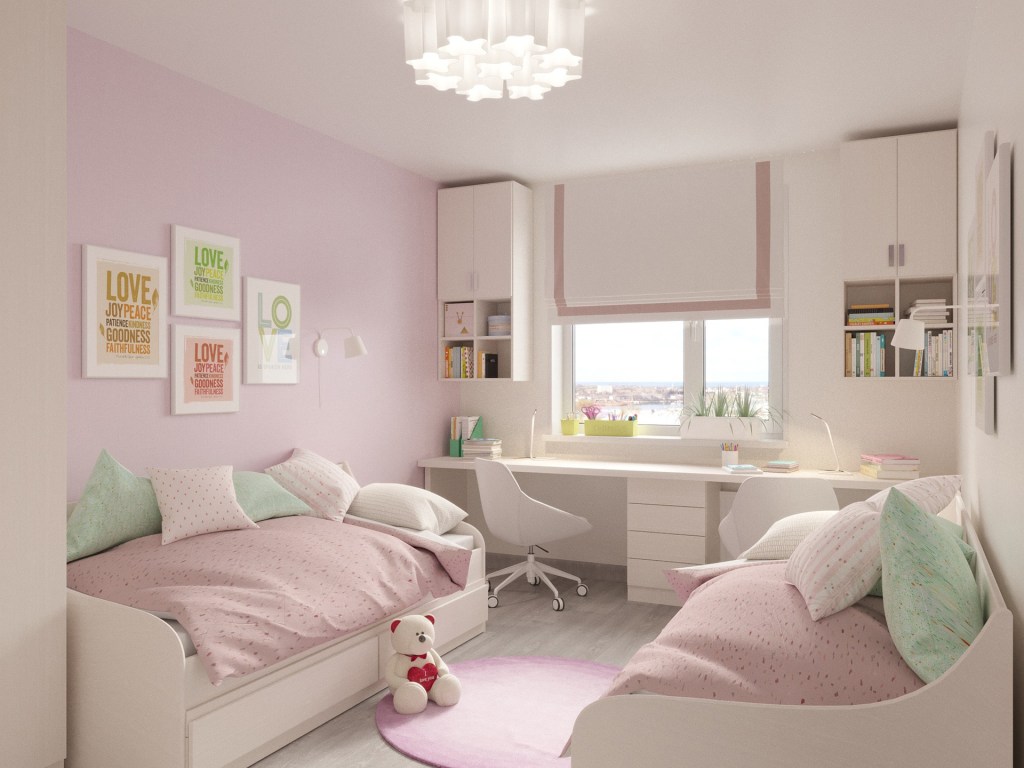
So in short, it’s an idea to include the colours that relax, calm and stimulate memory, joy and learning into nurseries, schools and classrooms as well as bedrooms at home.
Next time I’m struggling with a difficult child, I will see if I can test out the colour psychology and help calm them down!

Sandpaper Skin Syndrome

If like me your child has rough patches on areas such as the top of the arms, don’t be alarmed. It didn’t worry me too much as I just assumed it was dry skin, however I wanted to be sure I wasn’t overlooking anything and looked it up to work out what it actually was.

Like adults, children can get ‘keratosis pilaris’ which is also known as chicken skin – when body skin looks pimply or spotty. But it can also manifest itself as sandpaper-like skin that feels really rough to the touch. As well as the arms (my eldest’s problem area) it can also affect thighs, cheeks and even bottom cheeks. Other symptoms are redness, and excessively dry skin patches.

But rest assured it definitely isn’t anything to worry about. in fact it apparently affects up to 50% of the population at some point or other. It’s common amongst young children and doesn’t need treatment as such but can be moisturised.

It generally occurs when the hair follicle gets blocked with keratin- a protein which gets over produced in these areas. And tends to be worse at the change in seasons. It happens because the keratin in the hair gets clogged in the follicles and causes the bumps, red, dry or rough patches. So a bump forms over where a hair should be. This can be genetic and is also associated with other conditions like eczema.

Look out for moisturisers that contain AHAs – alpha hydroxy acids – these are lactic acid (derived from milk), uric acid (urea) and even glycolic acid. The idea is that the acids smooth the skin cells on the surface to minimise any irritation. But not all are deemed suitable for young skin.

It’s best to moisturise the skin directly after a bath and ensure that it isn’t too hot. Avoiding clothing that’s too tight which can also help alleviate it.

We have tried the Ameliorate Transforming Body Cream which really has worked wonders. (Suitable for three years and over) There are others I’m sure which would work just as well but I prefer the more natural ones. Another cream I swear by is Epionce Renewal Calming Cream which is also brilliant at clearing things up. Let me know if there’s anything else you’ve tried which has worked well.

No nappy rash Nappies

Did you know that it takes between 200 – 500 years for disposable nappies to biodegrade? ie they aren’t really biodegradable?

Whilst true eco warriors advocate reusable clothe nappies, these aren’t always practical in this day and age out & about – where & how do you store a dirty nappy that’s rather bulky and is highly liable to smell? Plus all that washing and drying warrants a house with a garden and clothes line or a dedicated utility or laundry room both of which I do not have at the moment.

Now thankfully there’s a compromise in the form of new wave of ‘eco nappies’ which are a halfway-house between the two. These don’t contain the potentially harmful chemicals and also therefore have less chance of giving your baby eczema, nappy rashes or discomfort.

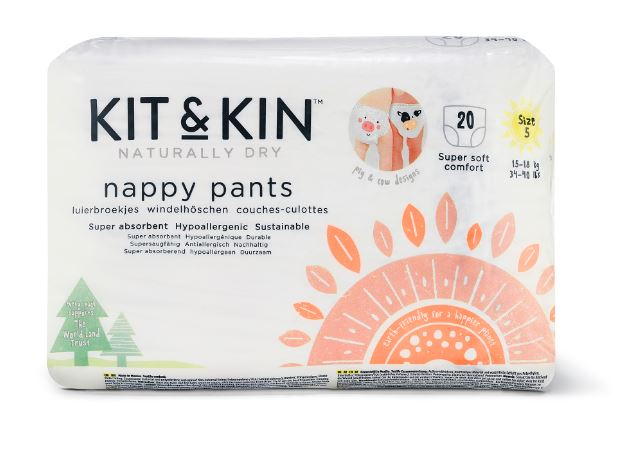
The brand I have been using a lot are Beaming Baby which have up to 54% less chemicals that other brands. Then there is another one, Kit & Kin co-created by Emma Bunton which is natural and sustainable. It promises that for every pack sold, it helps fund the purchase of a rainforest through the World Land Trust to help minimise deforestation.

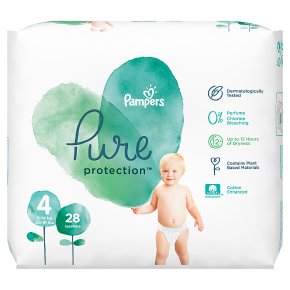
Pampers also seems to have brought out a ‘Pure’ range which I have only just discovered but that has been around for a year and a half already. This they claim is crafted with premium cotton and 100% plant based materials which are hypoallergenic for babies’ skin. I have now used these for a while (due to convenience as they’re in local shops and can arrive with shopping order). The only brand I didn’t get on with was Naty which seemed to constantly fall off my son – but maybe that was a dud batch…

Shop at http://www.kitandkin.com and http://www.beamingbaby.com and www.pampers.co.uk/nappies-wipes-pure/pampers-pure-collection